
A pool deck takes more abuse than almost any surface at your home. It is wet, barefoot and in full sun from May through September. The finish you choose decides whether it is comfortable and safe or hot and slick.
Grip comes from the texture
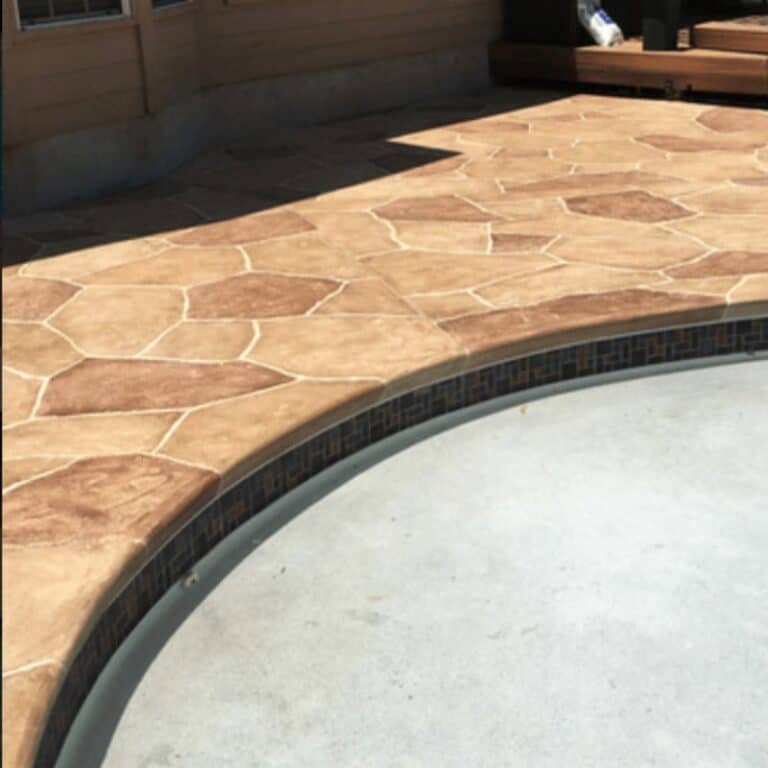
We hand-texture every pool deck overlay using a blend of marble and quartz aggregate. The varied surface gives bare feet better traction, even when wet.
Why not tile?
Tile looks good around a pool, but it is slick when wet, which is why you rarely see it on a pool deck. Pavers solve the grip problem but not the heat problem. An overlay with a hand-worked texture gives you traction and a comfortable surface in the same product.
Cooler than pavers
Most companies lay pavers around a pool, and pavers get very hot in the Texas sun. The research agrees that they absorb and store a lot of heat. In one lab study, concrete pavers reached about 131°F under a heat lamp, nearly as hot as asphalt, and held that heat for hours. In 2009, a Dallas custom pool builder ran their own test of surface heat around a pool, using our sample, a stamped concrete sample and pavers. On average, our hand-tooled overlay measured about 30 degrees cooler than the stamped concrete or the pavers. Austin Stone contains a good amount of marble aggregate right at the surface, which helps heat dissipate.
Color makes the biggest difference. Lighter colors reflect more sunlight and stay cooler than dark ones. If you have small children or walk around barefoot, choose a light color. The best way to judge a color is to see it in person.
Smooth finishes: your call, with a warning
If you prefer a smoother look, we can do it. Smooth surfaces get slippery when wet, so we ask you to sign a waiver confirming you understand. The sealer you pick also changes how smooth the finished deck feels, so we talk through both choices with you.
Pick a color that fits the yard
The color and pattern are hand-stained, so the deck can stand out as a feature around the pool or blend into the landscaping.
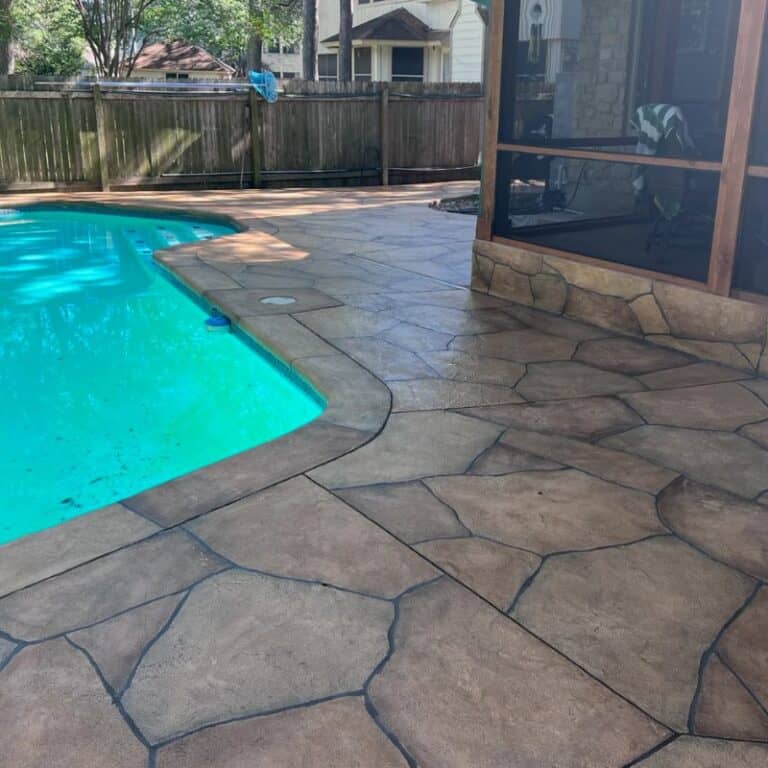
Have cracks in your deck? We work them into the design
We carve our own grout lines by hand, so any cracks already in the concrete become part of the pattern. If your pool deck is badly cracked, we usually recommend a flagstone pattern. Flagstone is random, like a stone that has broken naturally instead of being cut in clean, straight lines, so the cracks blend in. Besides hiding them, we put a flexible material in the cracks. If the concrete moves and a crack ever shows up again, the flexible material moves with it.
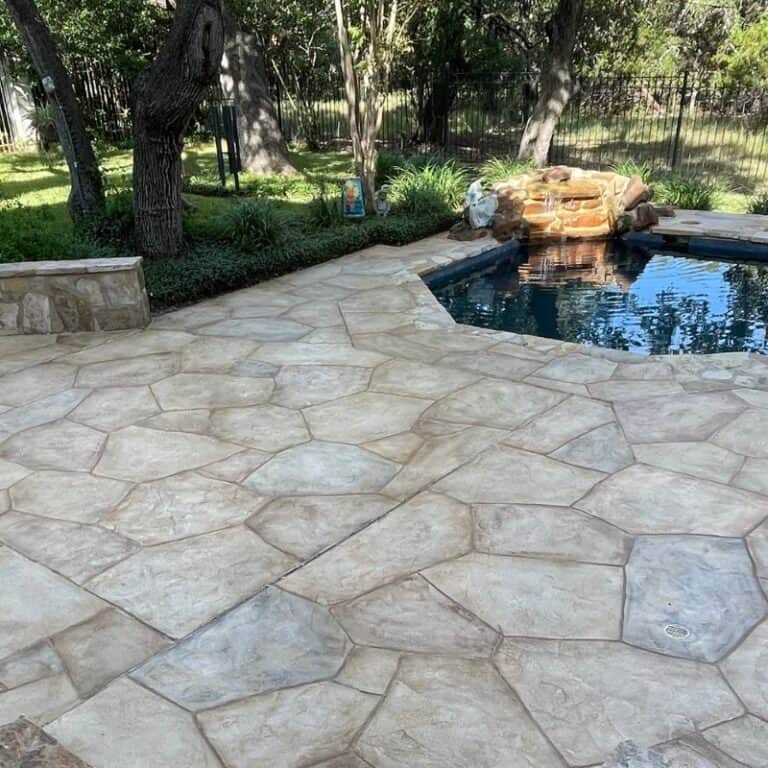
The sealer changes how the deck feels
After the overlay goes down we seal it. The sealer protects the color and the surface, and it also changes how smooth or grippy the finished deck feels underfoot. That is why we talk through the sealer with you before we start, especially if you have children, older family members or anyone who is unsteady on wet surfaces. Plan on resealing every 2 to 5 years to keep the deck looking and feeling the way it did on day one.
Built for saltwater pools
If you have a saltwater pool, the product holds up beautifully around it. The quartz silica and marble aggregates sit right at the surface, which adds to the endurance of the product.
Your pool stays full while we work
You do not have to drain the pool for a resurfacing. We take precautions to keep debris out of the water, and if any gets in, we clean it at our expense. Then you get your deck back, with the color you picked and a texture you can feel.
Want to see it in person? Call 512-461-4836. We have jobs near you that you can drive by and look at, or we can arrange to take you to one. We offer free estimates in Austin, San Antonio and Dallas.


