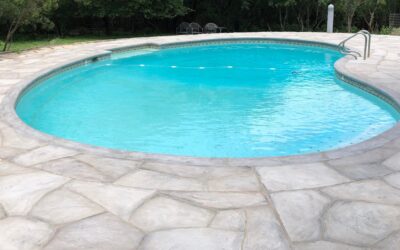
If your pool deck is cracked, stained or too hot to walk on, you probably do not need to tear it out. When the slab underneath is structurally sound, pool deck resurfacing costs far less than replacement and gives you a completely new look.
When resurfacing makes sense
Resurfacing works when the concrete is solid but looks tired: cracks, stains, chips, fading, or a rough surface that is hard on bare feet. We repair the damage first, refill the joints with a flexible compound that moves with the concrete, then apply a hand-troweled overlay about 1/4 inch thick. It bonds to concrete, brick, cement board, pea gravel and cinderblock.
When replacement is the better call
Replacement is only needed when the slab itself is badly broken or sinking. An overlay hides cosmetic problems. It does not fix a slab that is failing underneath. We will tell you honestly which one you have before you spend anything.
What affects the cost
Pool deck resurfacing is $6 a square foot to start. The final price depends on the pattern you choose, how much product goes down, and what is on the deck now. Three things move the price most: removing an old coating, the pool coping, and the steps.
Old coatings on the deck
Most pool decks we see are not covered in tile or carpet. They have another coating on them, usually a spray deck like Sundeck. It is a good product, but once it has been repainted or refreshed it loses its look and feel, and it shows every blemish in the concrete underneath. We remove it with a scarifier. Sometimes an old stamped overlay has to come off first, and occasionally we need chipping hammers to lift it. That is slow work, similar to removing tile, and it adds labor to the job. How much depends on what is on the deck: a spray deck usually comes up easily, while some stamped concretes are very difficult to remove. We look at what the old coating is, how well it is stuck down, how much of it is already delaminating, and how many days of labor and machine time it will take.
Pool coping is priced separately
Most in-ground gunite pools here have either brick or bullnose coping. We price it separately because it costs more to coat than the flat deck. The overlay material is the same, but the labor goes up. We have to wrap the coating into the pool, keep a clean transition to the waterline tile, and make sure no debris drops into the water. It is tedious, careful work and it takes time.
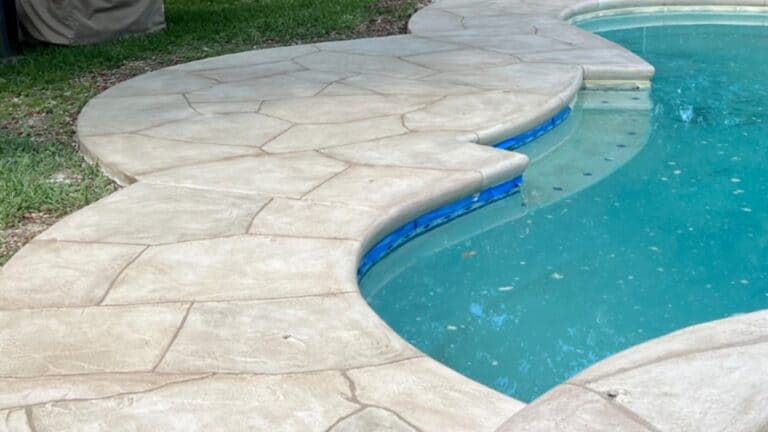
If your coping is not natural stone, we can coat it and make it look like natural stone, in whatever style you want. We also keep the expansion joint around the coping. As the pool water level rises and falls there is slight movement, and the concrete needs that joint to move freely. We do not cover it over.
Steps and size
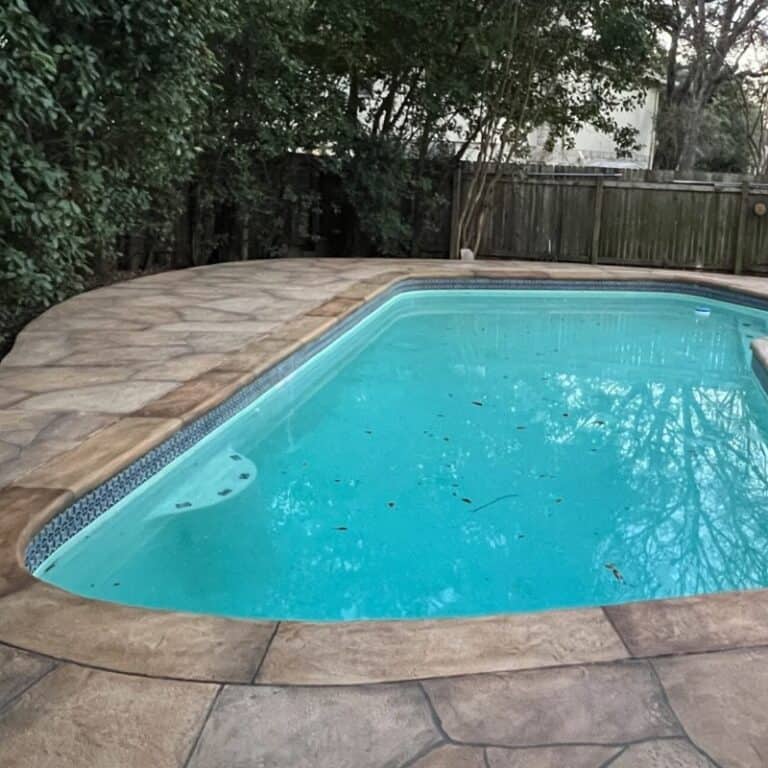
A larger deck costs more, and steps cost more per square foot because they take extra hand work. If old coating has to be ground off steps by hand, the added labor goes into the estimate.
Timing and the pool
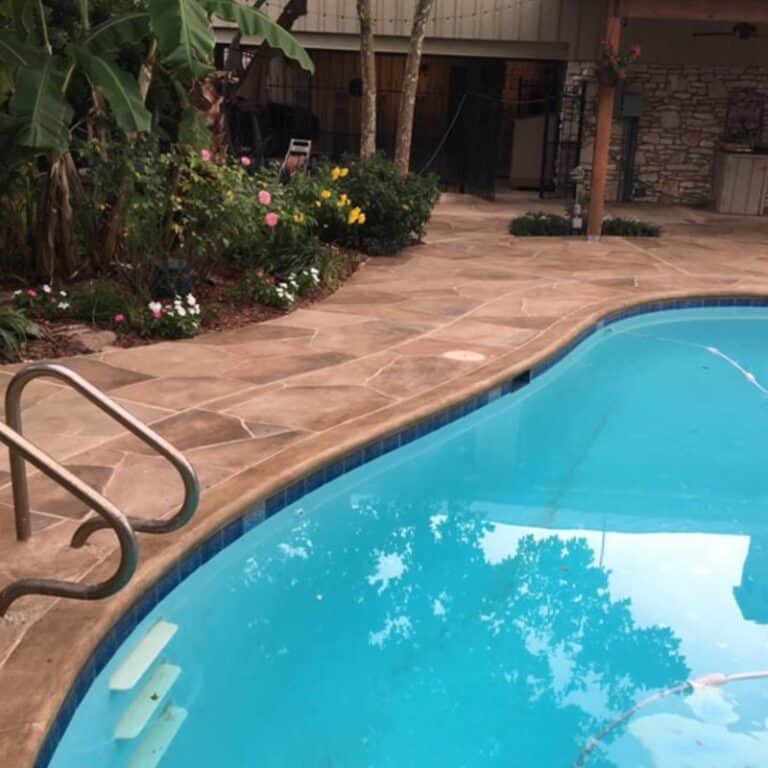
You can walk on a new pool deck 24 hours after it is finished. If we fill the joints with Sikaflex, give it 48 hours to set before driving on it. The pool can stay full during the work. We take precautions to keep debris out of the water, and if any gets in, we clean it at our expense.
What to ask any contractor
Ask if they carry insurance, who will actually lead your crew, and what the warranty covers. Our foremen complete hundreds of installs before leading a crew, and we give a 7-year warranty on labor and materials for delamination or peeling.
We resurface pool decks in Austin, San Antonio and Dallas. Call 512-461-4836 for a free estimate. We have pool decks near you that you can drive by and look at, or we can arrange to take you to one.